Free printable pack
Download four free A4 anti-bullying posters
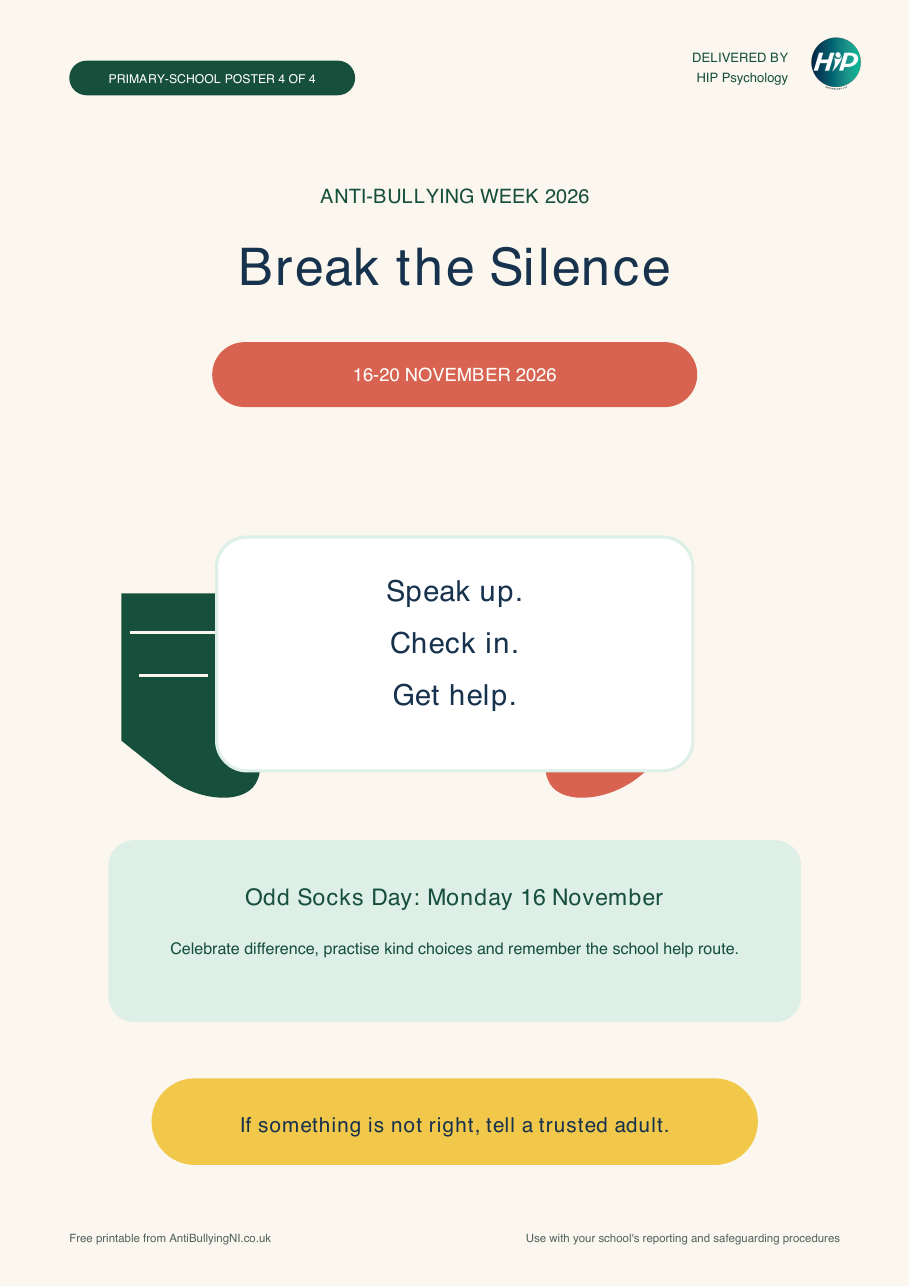
Use the posters in primary classrooms, corridors or your Anti-Bullying Week display. The pack covers bullying versus conflict, help-seeking phrases, safe upstander choices and the 2026 Break the Silence campaign.
Start with one useful job for the poster
Choose the action pupils should be able to take after reading the poster. One display might explain the difference between bullying and a disagreement. Another might show the trusted adults in school. A third might give safe choices for a pupil who notices someone being harmed.
A single clear purpose usually works better than filling one page with definitions, slogans, reporting steps and policy language. Use a short heading, a small number of points and enough space for pupils to understand the message while walking past.
Poster idea 1: What bullying is, and what it is not
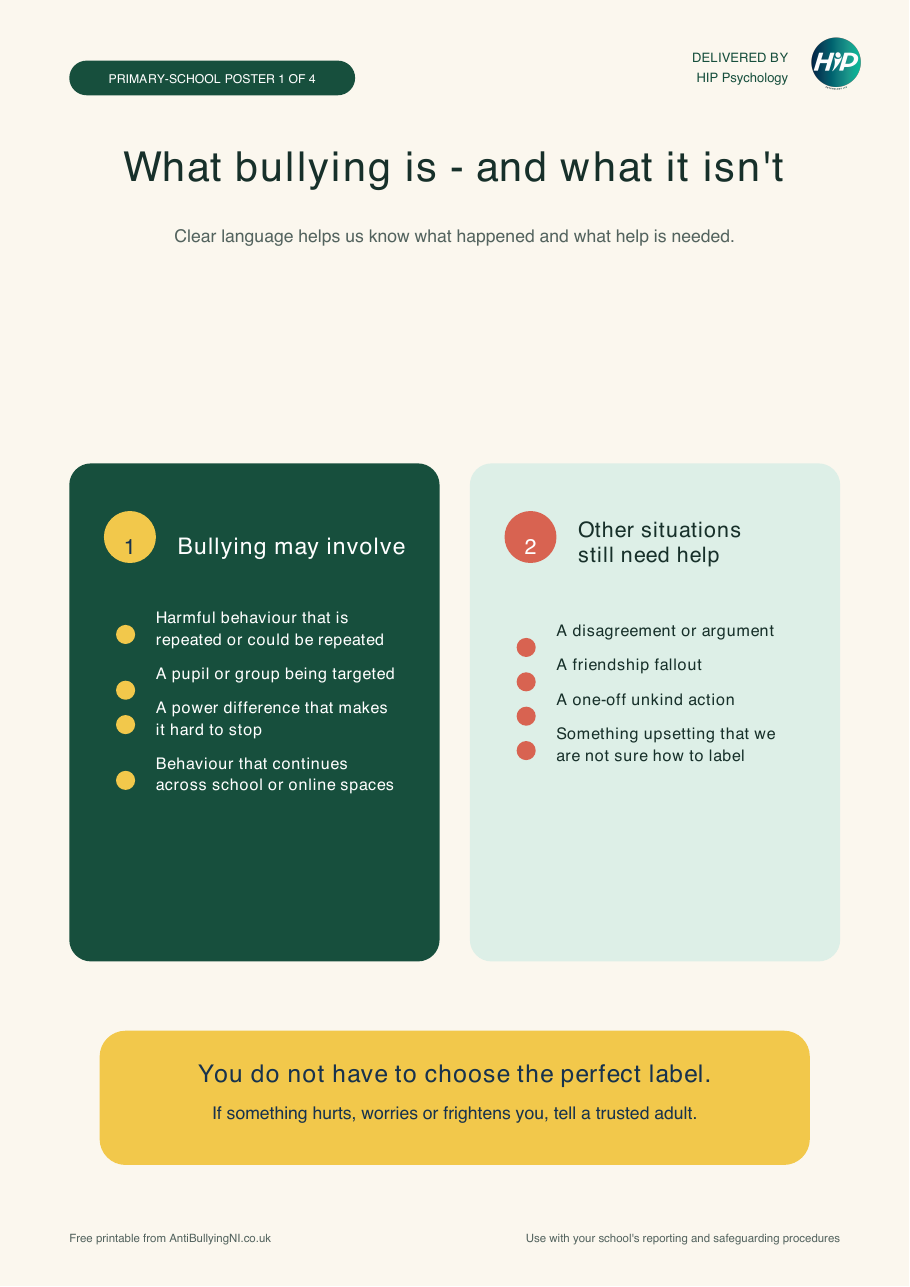
Divide the poster into two careful columns. Under “Bullying may involve”, include repeated or potentially repeated harmful behaviour, targeting and a power difference that makes the behaviour difficult to stop. Under “Other situations still need help”, include a disagreement, a friendship fallout or a one-off unkind action.
The second column must not dismiss harm. Add a line such as: “If something hurts, worries or frightens you, tell an adult even if you are not sure what to call it.” This gives pupils clearer language without making them decide whether an incident meets a formal definition before seeking support.
Poster idea 2: How to ask for help
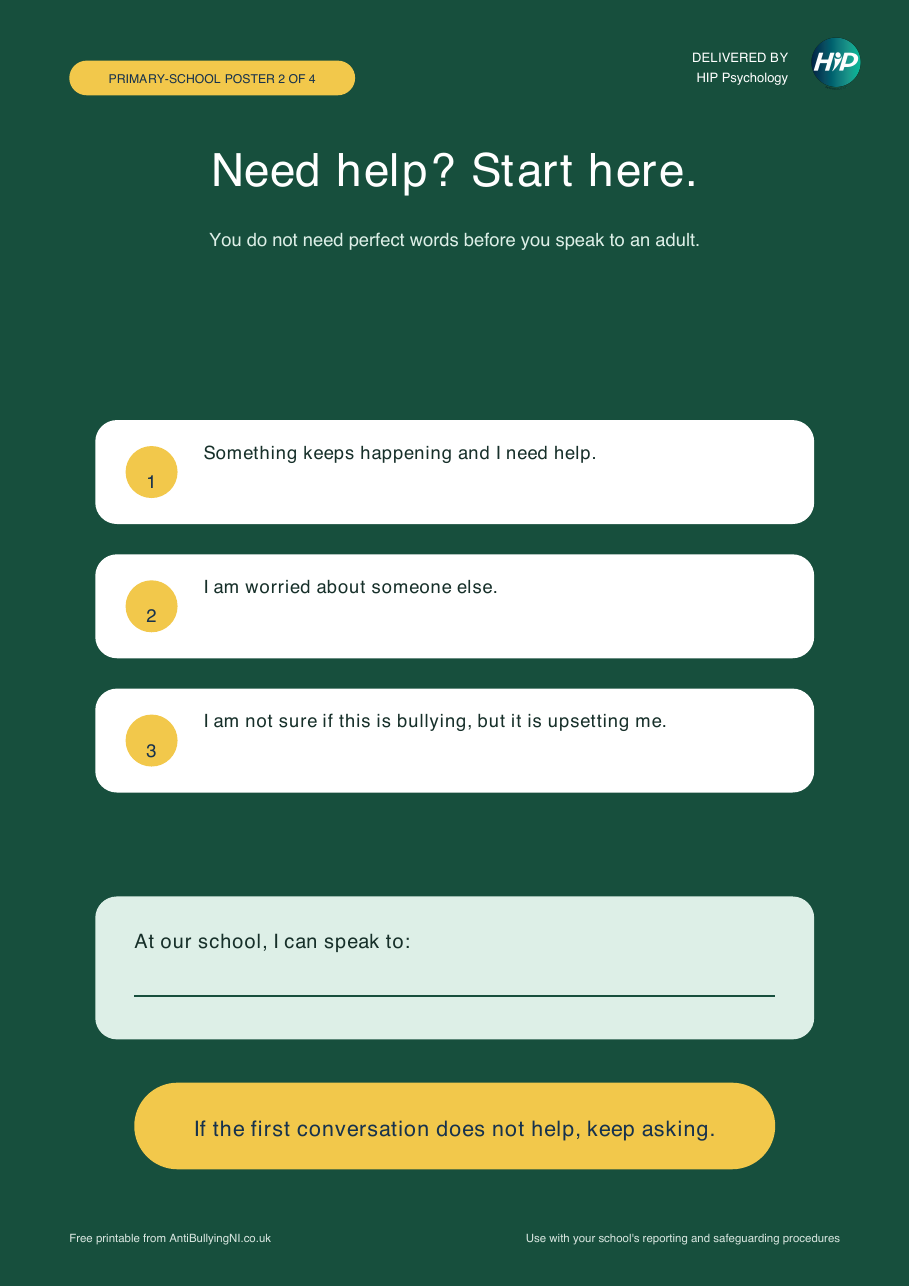
Make the school route specific. Include the role or name of the adults pupils can approach, where they can find them and what to say. Useful opening sentences include: “Something keeps happening and I need help”, “I am worried about someone else” and “I am not sure if this is bullying, but it is upsetting me.”
Explain what happens next in simple language. For example: an adult will listen, check immediate safety, record the important details and explain the next step. Avoid promising secrecy or an instant outcome. Pupils should know that adults may need to involve other people to keep someone safe.
Poster idea 3: Safe upstander choices
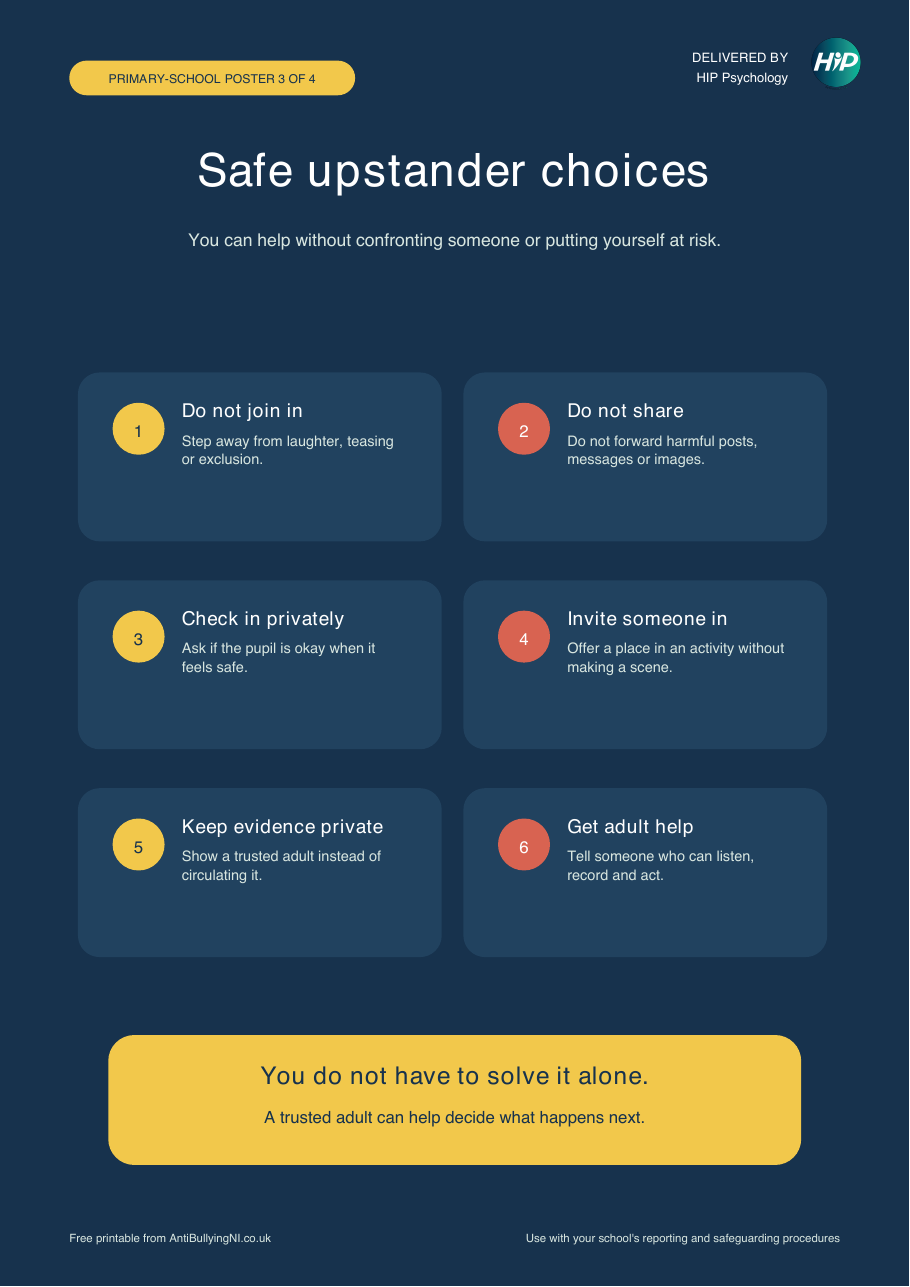
Give pupils several realistic choices rather than telling them to confront another child. They might refuse to join in, avoid forwarding a message, check privately with the pupil affected, invite someone into an activity, keep evidence private or tell a trusted adult.
Use fictional examples to ask which choice is safest. Make it clear that a pupil should not put themselves in danger and does not have to solve the situation alone. The responsibility for investigating and stopping harmful behaviour remains with adults.
Poster idea 4: Break the Silence or Odd Socks Day
For Anti-Bullying Week 2026, pupils can create a “Break the Silence” poster showing words that make it easier to start a conversation. On Odd Socks Day, a display can connect difference and belonging with the school help route instead of treating the day as a costume activity.
Keep campaign artwork connected to learning. Ask pupils to add one safe help-seeking sentence, one trusted-adult reminder or one example of using influence positively. The finished display can then reinforce the same language used in assemblies and classroom conversations.
Make the display clear, accessible and safe
Use large type, strong contrast and short sentences. Avoid colour combinations that make text difficult to read, and do not rely on colour alone to explain meaning. Place the poster where pupils can stop without blocking a busy corridor and consider whether younger pupils need symbols or adult explanation.
Do not include real names, incident details, screenshots or personal disclosures in a public display. If a pupil shares a concern while making the poster, follow the school safeguarding and reporting procedure rather than turning the disclosure into classroom content.
Use the poster after Anti-Bullying Week
Return to the poster during class discussion, before unstructured times and when reminding pupils how to report a concern. Check whether children can explain the message in their own words and name a trusted adult they could approach.
HIP Psychology’s live online P4-P7 anti-bullying workshop gives primary pupils age-appropriate clarity around bullying, conflict, power and help-seeking. Schools can use the posters to reinforce the workshop language throughout November and beyond.